Description
Component Harness Step Trauma Relief Device – Adjustable One Size
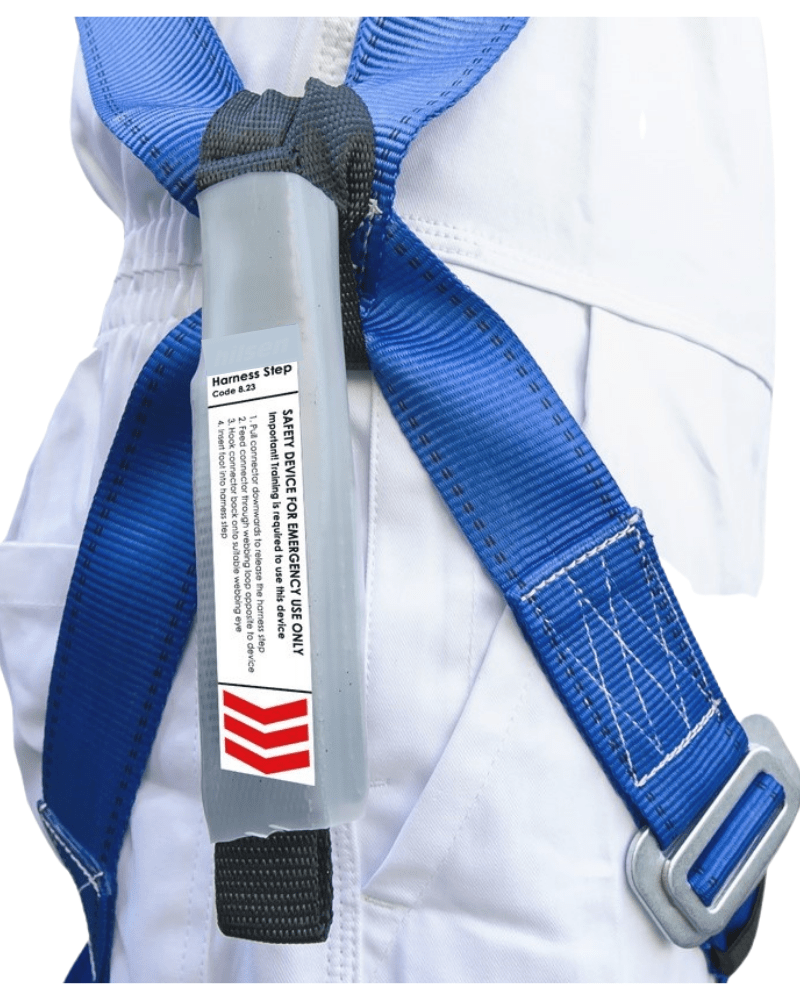
The Component Harness Step is a suspension trauma relief device designed for workers using fall arrest systems. It is intended to help reduce the effects of suspension trauma by relieving leg pressure and promoting circulation while a suspended worker awaits rescue. The device attaches to a harness waist strap, deploys quickly when needed, and can be used in construction, telecommunications, and industrial work-at-height environments.
Key Features
- 🦺 Helps mitigate suspension trauma during post-fall suspension
- ⚡ Quick manual pull-release deployment system
- 🎯 Attaches securely to a harness waist strap
- 🪶 Compact, lightweight design for minimal interference
- 🔧 Adjustable positioning using different webbing eyes
- 👣 Can support one foot or both feet during suspension
- 🏗️ Suitable for construction, telecom, and industrial applications
Benefits
- ✅ Helps relieve pressure caused by prolonged harness suspension
- ✅ Encourages movement and improved blood circulation while awaiting rescue
- ✅ Easy to fit to compatible harnesses
- ✅ Remains unobtrusive when not deployed
- ✅ Allows users to adjust position for improved comfort
- ✅ Provides additional support during emergency suspension situations
Specifications
| SKU | 8.35B |
| Product Type | Suspension trauma relief harness step |
| Size | Adjustable One Size |
| Application | Suspension trauma relief during fall arrest incidents |
| Fitment | Attaches to harness waist strap |
| Material | Durable webbing and connector components |
| Deployment Method | Manual pull-release system |
| Compatibility | Fits most standard safety harnesses |
| Adjustment | Connector can be repositioned to different webbing eyes |
| Foot Support | Single-foot or dual-foot use |
| Use Environment | Work-at-height, construction, telecommunications, and industrial environments |
How to Use
- Select a suitable anchor point on the harness waist strap.
- Loop the device around the strap and feed the connector through the webbing eye.
- Allow the unit to hang freely until required.
- After suspension, pull the connector downward to release the harness step.
- Pull the step fully from the protective cover.
- Feed the connector through the harness webbing and secure it to a suitable webbing eye.
- Place one or both feet into the step.
- Adjust positioning by relocating the connector to a different webbing eye if required.
⚠️ Proper training is required for the safe and effective use of this suspension trauma relief device.
Customer Reviews
⭐⭐⭐⭐⭐ “Compact and easy to deploy during rescue drills.” — Thabo S.
⭐⭐⭐⭐⭐ “Simple addition to our harness kits and easy to adjust.” — Michelle R.
⭐⭐⭐⭐⭐ “Provides valuable support while suspended.” — Gerrit B.
FAQs
Q: What is the purpose of the Component Harness Step?
A: It is designed to help mitigate suspension trauma by relieving pressure and encouraging circulation while a worker is suspended in a harness after a fall.
Q: How is the device attached?
A: The unit loops around the harness waist strap and connects through a suitable webbing eye.
Q: Can it be used with one foot or both feet?
A: Yes, the design allows either single-foot or dual-foot support.
Q: Is it supplied as part of a harness?
A: No, it is supplied separately and fitted to a compatible harness.
Q: Can the position be adjusted after deployment?
A: Yes, the connector can be moved to different webbing eyes to improve comfort and effectiveness.
Q: Which industries commonly use this device?
A: Construction, telecommunications, industrial maintenance, and other work-at-height sectors.
Industries & Applications
- 🏗️ Construction
- 📡 Telecommunications
- 🏭 Industrial Maintenance
- ⚙️ Manufacturing Facilities
- 🔌 Utilities
- ⛏️ Mining
- 🌬️ Wind Energy
- 🪢 Rope Access Operations
- 🚧 General Work-at-Height Activities
Add an extra layer of safety to your fall protection equipment with the Component Harness Step. Its compact design, quick deployment capability, and suspension trauma relief functionality make it a practical addition for workers operating in high-risk elevated environments.